The Kallini Brainworks

Welcome to the newly revised and revamped Kallini.com. This site is a repository of some of my creative work, just a few select writings and drawings. It will likely expand in the future, however, so keep watching this space, if you're interested in such things.

Home |

Login | Register | Member List


Advanced Search

May 2008
S M T W T F S
        1 2 3
4 5 6 7 8 9 10
11 12 13 14 15 16 17
18 19 20 21 22 23 24
25 26 27 28 29 30 31

This page has been viewed 10681 times
Page rendered in 2.4724 seconds
27 queries executed
Debug mode is on
Total Entries: 7
Total Comments: 0
Total Trackbacks: 0
Most Recent Entry: 03/03/2008 03:30 pm
Most Recent Comment on: --
Total Members: 1
Total Logged in members: 0
Total guests: 2
Total anonymous users: 0
Most Recent Visitor on: 05/09/2008 09:50 am
The most visitors ever was 22 on 04/22/2008 11:05 am

Referrers

Powered by:
ExpressionEngine

Design by:
Expression Engine Design

Sketch: Dark Elf
Monday, March 03, 2008
image
Posted by Kallini on 03/03 at 03:30 PM
FantasyDrawing • (0) CommentsPermalink
The Desert Tribes
Saturday, February 23, 2008

Everything within this category is comprised of contributions of mine for an unofficial, fan-created expansion for a desert-based culture in a particular online fantasy rpg. I’m reposting my favorite pieces here, with the few elements that belong to the game in question removed, leaving everything posted as entirely my own work.

Posted by Kallini on 02/23 at 10:36 AM
Desert TribesFantasyNews • (0) CommentsPermalink
Jealous Spirits

The Maanishaga practically swarms with spirits compared to the rest of the continent. To the Khathir, the undead are merely one more type of spirit they must contend with in the regular course of their lives. They are not necessarily anathema, however.

Amongst the restless dead, there are those who are harmless to the living, and those that are actually benevolent. Others have been trapped in a tortured existence as righteous punishment for their crimes while alive, and are either pitied, or used as cautionary object lessons for those who would stray from that which the Khathir hold sacred (the Ashari sanction against all undead, no matter their nature, is looked upon with derision by many tribesmen, seen as an overly simplistic view of the nature of undeath and the variety and hierarchy of spirits).

Those undead who are harmful to the living, however, are known to the Khathir as jealous spirits (raamaani, in the dialect of the Chuladh). The jealous spirits are drawn to the living, and hunger for those attributes that make them alive - their flesh, their emotions, and sometimes their very souls. Some individuals and tribes refer to all spirits inimical to life as jealous spirits, as opposed to strictly the undead.

Jealous spirits often manifest in human or humanoid form, and are sometimes indistinguishable from the living. Many are the kinds who prefer to simply tear the life from their prey, but some can be devious, preferring to seize their prey through cunning rather than simply assaulting them.

A raamaani that acquires an item of personal significance to someone can wreak terrible havoc in a number of ways, from cursing that person, to being able to track him endlessly across the desert. The most intelligent can even use the item to birth an evil construct that is bound to the item’s source in some way, often by taking its form.

Blessing weapons in order to harm the undead is a known practice amongst the Khathir, though they do not know it as “blessing”. Some Spirit Talkers are able to speak to the dead, and remind them of what it was like to be alive, and thus, in remembering, the raamaani become vulnerable to that which could harm them in life. A Spirit Talker can speak to the soul that resides in a weapon, and grant it this ability as well. So, when a tribesman needs a weapon blessed, he presents it to a Spirit Talker, and asks him to “Allow my blade to Remember”, or “Grant my weapon Memory,” so that one may Remind the Lifeless with it.

Posted by Kallini on 02/23 at 12:41 AM
Desert TribesWritingFantasy • (0) CommentsPermalink
Excerpt from the Exodus of the Axe

With the success of Imperial Scholar Indus Varesin’s journey into the Spirit Sands, as recorded in his treatise “A Walk in Fire: A Year Amongst The Tribes” (5040), many other scholars decided to attempt the journey, funded by a variety of interests. Very few were as successful as Varesin, and some got caught up in tribal conflicts. One of the survivors of these, Niran Janacek, a retired Imperial legionnaire turned educator, managed to record his experiences in what came to be known as “The Exodus of the Axe”, published in 5077. This is a portion of that record:

I watched the approaching sand cloud with a sense of growing horror. While our infantry held the footbound warriors of our enemies, their cavalry had taken the opportunity to easily maneuver around the skirmish. Instead of sweeping up our infantry from the flanks or rear, however, as I had predicted, the horse were now charging directly into our unprotected center, where all those unable to fight - women, children, and the elderly - had taken refuge. 

As the only one who had counseled against leaving them unprotected as this latest battle loomed, I turned once more to plead for intervention. It would be close, but if we could divert some men, even just the spellcasters amongst our small group, perhaps we could at least blunt the attack, or -

“Silence, Scholar,” the warleader interrupted, before I could even open my mouth.

Clamping my jaws shut in frustration, I glanced over to where He stood, the shield and the cruel axes bound to his harness gleaming in the unforgiving desert sun. His steel gaze was trained impassively on the scene, as were those of the rest of the war council - the three heavily tattooed Spirit Talkers, the deeply robed and masked Xshithi Raamaani, and the lightly clad messengers.

“Your protests were noted earlier and ignored. I do not wish to hear them again.”

Thinking myself shut out once more, I was surprised when the warleader continued in his mildly accented Imperial, his voice still taut as a bowstring.

“Do you think I left our elders, our women and children - my only remaining son included amongst them - open to assault merely by accident? That we have thrown them to the jackals simply because we did not have the warriors to spare to both secure them and throw back our enemies once more? No.” He lectured me as calmly as if discussing his favorite flavors of tea, while I nervously watched doom approach our most helpless tribesmen and fellow refugees.

“We need to rid ourselves of their accursed cavalry, that their agakuri, their ‘wizards’ keep watered. We cannot outpace them, and they have harassed us day and night on this march. We will finally have an end to them this day, by giving them exactly the opportunity they have wanted for so long, and letting them seize it.”

There was no longer any hope of getting there in time.

The cavalry smashed unresisted into the dense mass of the baggage train, the bodies of the elders in the undefended perimeter flung and trampled before them. The mounted warriors howled in bloodthirsty joy. Finally, amongst their hated enemy, the resolution of untold generations of warfare laying unopposed before them. Finally, they held the opportunity to carve out the heart of the tribe that they so detested and devour it. For while a tribe can continue to fight with its men alive, to destroy the women and children is to destroy its future, and thus extinction becomes inevitable, no matter how skilled their warriors.

I knew, intellectually, that warfare was total amongst these people, but I had yet to realize just how true this was.

I could only watch in mute dread as the horsemen hacked through the heart of the camp, sparing no one, pushing inward over the corpses of the oldest members of the tribe, towards the center where the women and children waited, huddled. As the cavalry pressed towards their prize, the camp became denser, materials and animals held closer together. Their advance slowed, though it became no less deadly. Curved swords raised and lowered incessantly, another elder falling with each downstroke. Their progress slowed even more, and they seemed almost strained now as they pushed onwards, moving slower even than the press of the camp would explain. In addition, their swords kept falling, despite the fact that no elders were left standing by them. The blades cut erratically, and they seemed to be striking down towards their mounts.

“Do you see, scholar? It begins.”

And I did see. And what I saw was almost as terrifying as the assault itself had been just moments ago.

The attack had stalled because the elders they had slain had been trailing nets and ropes, barbed and tangled. I discovered later that some of the eldest, those who barely had the strength to stand, had even wrapped themselves in such snares and thrown themselves at the feet of the horses. The mounts, the momentum of their charge gone, were now hopelessly tangled in masses of twine and corpses, and the pain of the hooks began driving them to madness. As the riders began hacking at the ropes, trying to free their crippled mounts while also trying to keep them from panicking, the second stage of the trap was sprung.

The mass of women and children, who had been apparently huddled in fear mere seconds before, now let loose their own howl and charged outwards. Many also crawled from beneath blankets and other piles of supply and together they swarmed the riders. First to fall were the horses, as the ropes were grabbed, the slack taken out, and then pulled in several directions at once. I could hear the snapping of bones and the terrified whinnies as the mounts collapsed.

And the moment the horses struck the ground, the riders were doomed.

They were not inexperienced riders. Many managed to leap from their steeds before they fell. At least one was not so lucky as his flailing horse struck him with a hoof in mid-leap, twisting his neck at an impossible angle before he fell twitching to the ground. The enemy warriors who had retained their feet brandished their sabers at the horde of women and children rushing at them, but they might as well have tried to fight a sandstorm. A few lethal blows struck home before they were hopelessly overwhelmed.

It was madness. Anything that could be used as a weapon by the women and children had been appropriated. Knives, needles, rare, valuable shards of glass wrapped in cloth...Anything. And they used them without hesitation on the men who had dared attack them, who had barely been given a chance to scream before they were quite literally torn to pieces. Everywhere I looked was insanity. At one point, I saw a woman, her left hand neatly severed by a scimitar, lean down and tear the throat out of an enemy tol sare with her teeth, while the child next to her, barely old enough to walk, drove a sharpened stake through the man’s eye. His was one of the quicker, kinder deaths.

Perhaps a minute later, it was done. Of the assault, none were left alive. None were left in large enough pieces to tempt carrion birds.

The voice of the warleader broke through my shock.

“Indhal, see to the wounded. Shiraya, see that the horses are butchered properly and added to our stores.” Two of the Spirit Talkers moved towards the baggage train. Tearing my sight away from a young girl swinging a severed head around with a yowl, I looked back at the council, whose own attention had already been given once more to the infantry battle. A messenger had been dispatched, presumably to both inform our men and taunt the attackers of the success of our plan, and the annihilation of their light horse.

The intense steel-colored gaze of the warleader shifted in my direction, and the look in his eyes chilled me to the bone, despite standing at high noon in the desert.

“Our enemies have learned too late our true strength, Scholar. Our tribe may be dead, but our warriors remain. And now every last living member of my tribe are warriors, blooded and true this day.” With that simple statement, I was dismissed from his attention, and he turned again to gauge the progress of the infantry skirmish.

And these people, these fragments of a broken tribe, were leaving the desert, coming to settle in my Empire?

I sent a prayer to the All-Father, for my Empire, for these tribesmen, and especially for those who would oppose them.

Posted by Kallini on 02/23 at 12:33 AM
Desert TribesWritingFantasy • (0) CommentsPermalink
A Walk in Fire: The Oasis Ceremony

From the journal of Imperial Scholar Indus Varesin, as quoted in his treatise “A Walk in Fire: A Year Amongst The Tribes”, written in the year 5040.

I had taken my leave of the revel, and walked out to the edge of the oasis. Away from the fire and festivities, the night air held a chill, and I reflexively pulled my thick cotton robes tighter around me. I missed the finery I’d arrived in the desert with, but it had long since been worn away by the sand and wind. I stared out across the desert, luminous beneath the moons, and I do not know how long I stood there before I was startled out of my reverie by a deep voice from behind.

“You left the ceremony, Outlander. That leaves you unmarked.”

Turning, I saw a large form step from the darkness between the palms. Smoke from the bonfire had reached the edge of the oasis and partially obscured my vision, but there was no mistaking the imposing figure. It was the tribe’s smith, Guradh, and as he drew near I noted that he was covered with the odd symbols the Spirit Talker had been painting the tribesmen with this evening. Guradh was also the tribe’s mage, skilled with elemental magics, and I had come to understand that the two roles are often intertwined amongst the Khathir. As one of the few tribesmen fluent in Standard High Imperial, he and I had spoken in depth on many occasions about the practices of his tribe and clan, even as I educated him about the customs of the Empire.

I apologized to him for leaving, but I had grown tired, and merely wished to be alone for a while, away from the noise and light.

“And that is all it was to you - noise,” he said, his dark eyes glancing speculatively at me. “You have been with us for how long now? And yet you refuse to understand.”

The smoke continued to irritate me, and I confess I could find no more words with which to defend myself, so I merely shrugged. Clearly, this ritual had been important to them and their spirits, but I was a devotee of Miradra the Enlightened, and so these tribal beliefs held no meaning for me.

The smith shook his head, almost sadly.

“And you are what passes for a learned man in the Wet Lands? Do you all ignore the truth before your eyes, believing only that which is written? Can you learn nothing that does not come to you scratched into a dead plant?”

I began to bristle at his condescending tone - I was a lecturer at the University of Nashrim, after all, and the quality of my scholarship was not a matter of dispute, especially by a people who were largely illiterate - but the smoke was making my eyes water and my throat burn, and I could do little more than listen as he continued.

“You worship a mere handful of spirits, servants of the true creators, and assume that all others are false simply because they do not bother with you… You believe our rituals merely superstition, without ever asking why they are performed. You Outlanders live apart from your gods. Most of you never even hear or see one. We Khathir walk with them, surrounded by them, every moment of every day. This desert is not just sand… It lives.”

By this point, I had developed a hacking cough, and could barely even look at the smith through my paroxysms. Despite this, though, his words cut through the haze, and I still recall them all perfectly.

“This oasis… It suffers under a curse, and has for ages. How it began is a tale for another time, but we cannot simply abandon such bounty, despite the darkness that pervades it. And so the ritual, the one that you left out of disinterest, makes us invisible, for a few days, to the beings that lurk here, and hunger. But you? You understood nothing, and so assumed there was nothing to understand, and wandered off.”

Guradh lifted a finger and chanted in a tongue unfamiliar to me. An intense light burst from his hand, striking the smoke surrounding my head. Even as the flash blinded me, I was deafened by the shriek of something that, I was certain, had never been alive. I then felt the smoke pull, almost slither, out of my chest and eyes, and then fade into the night. I fell to my knees, gasping for air, choking in revulsion.

“You invite the luck of a red-hair. Had I not found you, you would have been a withered husk by morning. And since you remain unmarked, you will now have to be watched the entire time we are here. You will repay the resources you will drain from the tribe as we guard you, or we will leave you to the mercy of the sands.”

By the time my vision cleared, and I was able to stand, he was gone, back amongst the palms. I hurried to follow.

Posted by Kallini on 02/23 at 12:24 AM
Desert TribesWritingFantasy • (0) CommentsPermalink
Xshitha Raamani - The Spirit Hunters

The Maanishaga is home to an unusually high density and variety of spirits. Amongst these are the jealous spirits - raamaani - known to Outlanders as the undead, and while Spirit-Talkers are capable of combating them, and of granting memory to the weapons of their fellow warriors, rarely are these full-time pursuits. Most Spirit-Talkers and warriors have numerous responsibilities to their tribes and families, such that they cannot devote themselves exclusively to the hunting of the undead. There are those select few tribesmen, however, that do make a passion of such work, and these spirit hunters are known as the Xshitha Raamaani (literally “Those Who Fight Jealous Spirits").

Those Outlanders who are familiar with Ashar and the teachings of his monastic order would see the Xshitha Raamaani (singular: Xshithi Raamaani) as kindred spirits, and the Spirit Hunters would likely view the Ashari order in the same manner. Their goals and abilities are essentially the same, although there are key differences within the cultural and religious frameworks surrounding the two groups.

The ability to Remind the undead with the very touch of one’s body is especially revered amongst the tribes, and the art known as An Khesra - “Hand Memory” - is very similar in effect to the unarmed fighting style of the Ashari monks.

Unlike the monks, the Xshitha Raamaani do not belong to a unified order. They are scattered amongst the tribes, and most have their own training methods that a Spirit Hunter from another tribe might not recognize at all. A tribe may have only one or two Spirit Hunters who pass their secrets down to a select few apprentices, and most never leave their tribes to share this information with others.

Also, the Xshitha Raamaani do not frame their conflict with the undead as part of a larger conflict between pantheons of gods. Not all desert tribes recognize the Outlander deities, and even those that do don’t always organize them along the same lines. Though the powers of a Spirit Hunter are roughly the same as one might find in the repertoire of an Ashari, often it is local/tribal spirits who grant this power, rather than the ascended Ashar or his allied gods. These desert spirits require their own unique tasks in return for their favor, and their reasons for granting it can vary wildly. A local spirit of the Maanishaga may have a personal vendetta against undead, or it may wish to protect the tribe that honors it, or it may simply not care about anything but its own power and views the Spirit Hunter as a means for increasing its worship and prestige. There can be differences on the Spirit Hunter’s end as well. While much depends on the spirits involved and their relation to him and his tribe, the Xshitha Raamaani often views the attaining of these powers not as “dedication” to the spirits granting them, but rather as bargaining with them. It is more of a transaction between two equal parties than devotion to a higher being and its beliefs. The high density of spirits in the Sands tends to make the Khathir simultaneously more spiritually aware and more jaded and practical towards interaction with spirits than your typical Outlander.

There is also no dedication amongst the Xshitha Raamaani to the releasing of all undead. For the most part, they are interested in opposing only those jealous spirits that directly threaten them or their tribes and families. The Khathir have a much more nuanced view of the undead than most Ashari, and as the Khathir as a whole have been forged by the harsh conditions of the Spirit Sands, they are also prone to harsh judgement upon others. They do not see all cursed souls as worthy of release and redemption. There are those they believe fully deserve to spend eternity tormented, roaming without rest or peace. Unless personally threatened by such a jealous spirit, most Hunters will not make any effort to free it. If one were to look at Ek Saap, the First Serpent, one could see how the Xshitha Raamaani would not be interested in freeing a soul trapped by Him, if those He takes are indeed guilty of violating the laws of the Creators.

Aside from these doctrinal differences, however, there are more similarities than not between the Order of Ashar and the Xshitha Raamaani, and it’s unlikely that even the most zealous members of the two groups would ever do more than argue philosophy over ale or khava. In fact, it is not unheard of for Spirit Hunters outside of the Maanishaga to be accepted into the ranks of the Ashari monks that they may assist each other better. Much like the mortal members of the groups, their various patron spirits rarely come into conflict either, and many of the powers they grant are effectively interchangeable. Xshitha Raamaani who are adopted into the Order typically have no problem also adopting its terminology in the interest of facilitating communication. It’s simply easier to do so than to try to explain the differences when the effect is much the same. Not many Outlanders would care to know that the particular Tehir learned his art from, say, his Tribe’s patron spirit, Akhala, who manifests as a humanoid with the head of a desert wolf and is known in legends for his incomparable wrestling ability.

Posted by Kallini on 02/23 at 12:09 AM
Desert TribesWritingFantasy • (0) CommentsPermalink
Kalahaya - The Black Wind
Friday, February 22, 2008

In the heart of the Maanishaga, the Spirit Sands, in an ancient tomb complex near the bones of a ruined city, dwells a tribe that is not a tribe, a band that is spoken of only in hushed whispers. They are a clan of assassins, xunlari, and they are known as the Kalahaya - the Black Wind.

Ask the desert tribes, and they will tell you that the Kalahaya is as old as they themselves are.  Even the Black Wind itself doesn’t know how long it has existed, its origin long buried in the sands, though they credit their founding to a group known as the Nao Javar, the Nine Shadows. When these men lived, however, remains a mystery...assuming they were, in fact, men, and assuming they do not still live.

The Kalahaya have no singular identity, as they adopt and train outcasts from all tribes, thus physical appearance, dress, and even tribal dialect can vary wildly from one assassin to the next. Redhairs (suryexetu) are represented in greater numbers amongst the assassins than in nearly any other Khathir tribe. It is unknown whether this is because more redhairs end up as outcasts, or whether this is because they are simply more suited to such dark endeavors, but either way it does nothing to help the poor reputation suryexetu hold within most other tribes.

The assassins will adopt anyone they feel has the potential to learn their arts well, and should an individual survive training, he or she is considered a full member of the clan, regardless of background.

The subterranean tomb complex the Black Wind inhabits is referred to as Chathre da Had, the Cave of Bone. Very few individuals are willing to venture close to even the outskirts of the cursed city at the center of the desert, never mind explore the underground necropoli, so the home of the Kalahaya has remained secure for ages. Those who wish to procure their services do not seek them there, but rather perform very specific rites to draw their attention. The nature of these rites vary depending on tribe and region, and generally involve leaving a very specific sign in a particular oasis, rock formation, or similar landmark. It is rumored that some Tehir who have left the desert still retain knowledge of the Black Wind and how to contact them, and that the assassins are not only willing, but quite capable of accepting contracts outside the Sea of Fire.

As the Kalahaya are not known to be nomadic, it is assumed that they have learned to be self sufficient with the resources available to them in the Cave of Bone and the surrounding area, despite its many dangers.

The Kalahaya do not practice disguise or other methods of “blending in” in order to safely approach a target. The nature of tribal society prohibits the effectiveness of such attempts, in any case - everyone would easily be able to identify a stranger. Thus, they focus on stealth and infiltration as their prime assassination methodology. Their preferred weapons are the knife and katar, though the Wind’s trainers are practical - should a member show exceptional skill with another type of weapon, or even magic, that talent will be exploited to its fullest lethal potential.

Most of the tales told about the Black Wind are layers of myth wrapped tightly around a small kernel of truth. Some say the Kalahaya are composed of those who eat the flesh of men upon becoming blooded warriors (xoraltha da sare - “those who eat of men"), and that they taste the blood of every one of their victims. Some tales tell of the dark spirit who dwells between life and death in the lowest reaches of the Cave of Bone, who serves as both their chieftain and their god. A few tribes whisper that the Black Wind is the mortal hand of Ek Saap, the First Serpent, meting out the vengeance of the Creators. Still others say that they are simply men who take pride in the art of murder and the power and fear they wield. The tales are endless, and only the Kalahaya know where the truth lies. The Black Wind itself spreads many of these legends and rumors, the better to keep their nature secret and their potential victims unsure and uneasy.

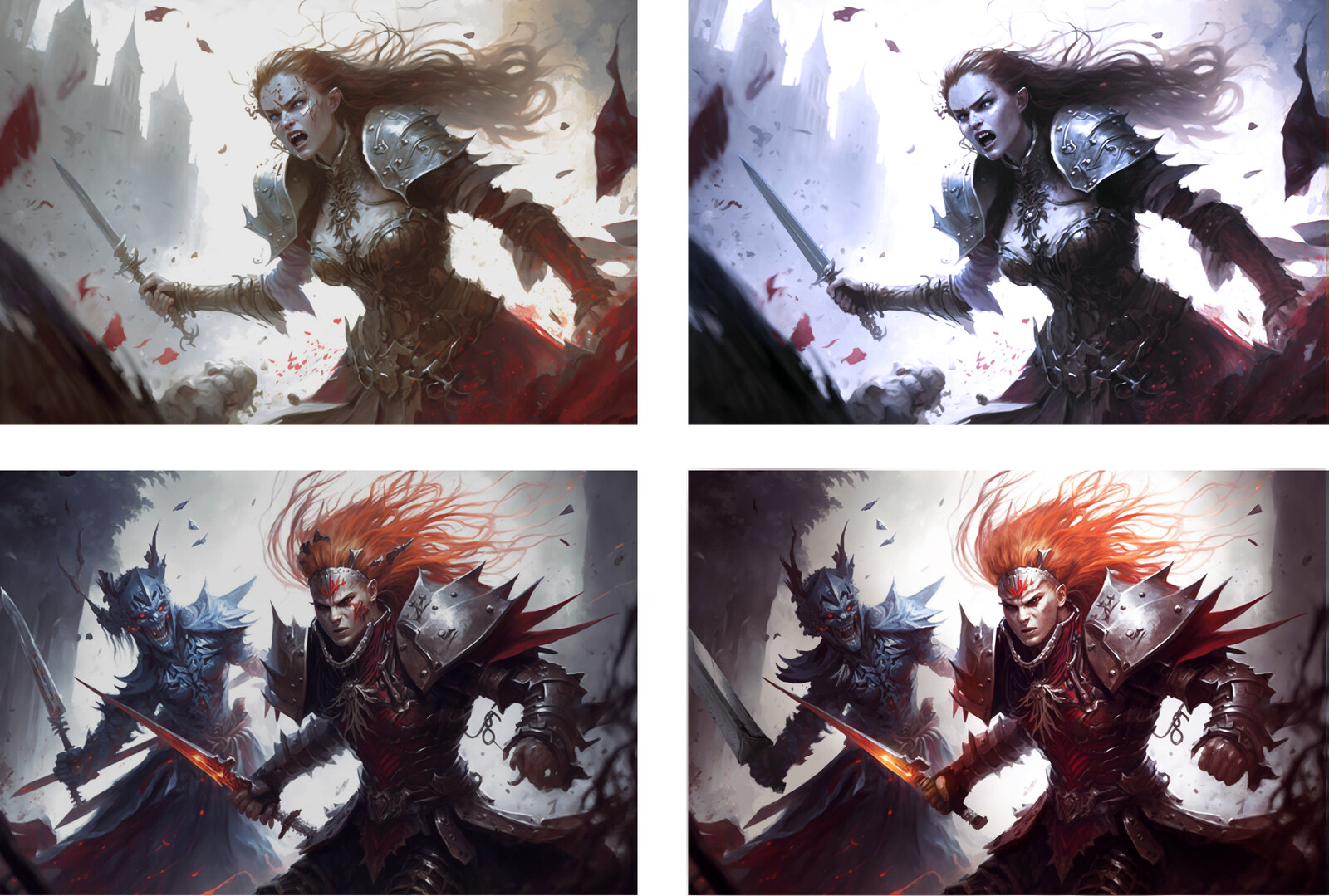
[While not a drawing of my own, this drawing provides an excellent illustration of just what a member of the Kalahaya might look like]

Posted by Kallini on 02/22 at 11:57 PM
Desert TribesWritingFantasy • (0) CommentsPermalink
Page 1 of 1 pages